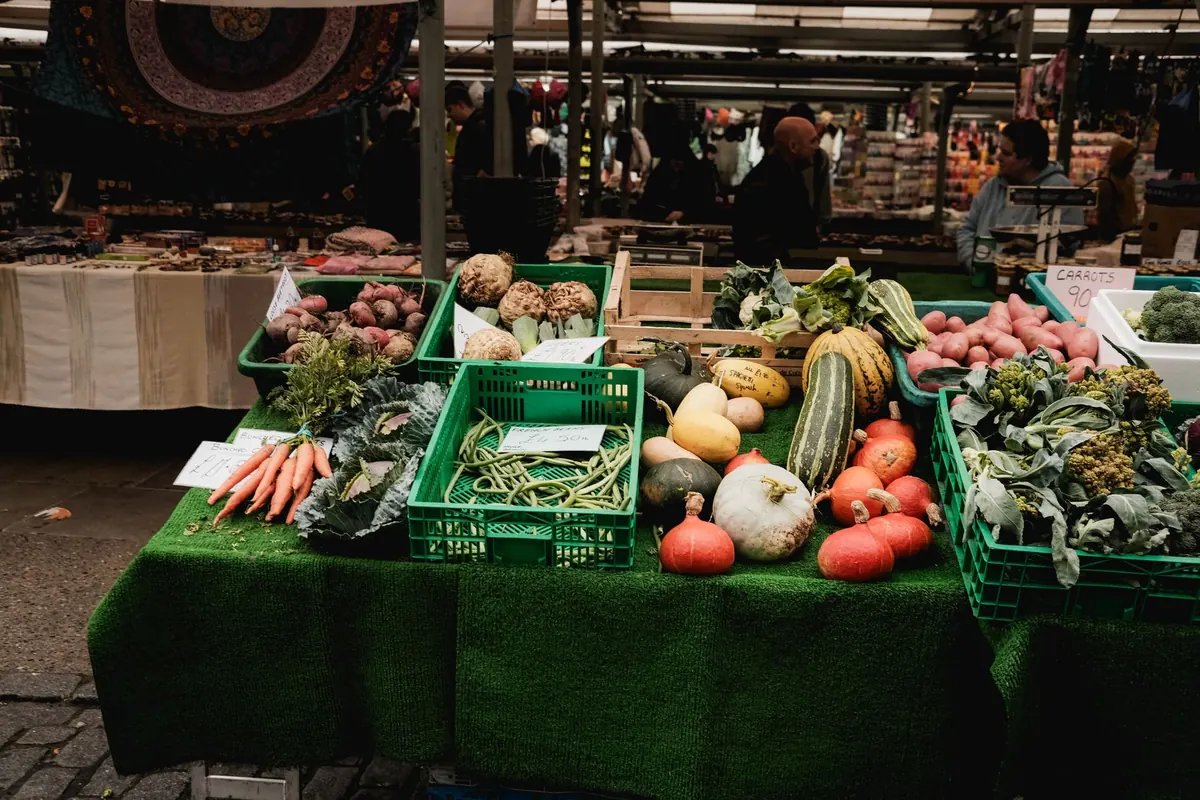
The first Saturday is usually fine. You arrive early, the table looks more or less like the picture in your head, and the market's own noise carries you through to lunchtime. It's the fourth Saturday that tells the truth — the one where the weather turns, the regulars have already formed their opinions, and you realise you have been guessing at half of what you're doing.
None of that is unusual. Every stall on the Valley Market floor was new once, and the vendors who have been trading there for years will happily tell you they made most of these mistakes themselves. What follows is the short version of those conversations: the errors that cost money quietly rather than loudly.
The most common mistake is not charging too much. It's charging something that feels polite, then standing there at four o'clock after a busy day wondering where the money went.
A pitch fee is the same whether you sell one jar or sixty. That single fact breaks more new stallholders than any other. Before you set a price, sit down with paper and list everything one market day actually costs you: the stall fee, transport and parking, packaging and labels, card terminal fees, insurance, the raw ingredients or materials, and — the one everyone forgets — the hours of prep the night before and the packing up afterwards. Add a small allowance for what you don't sell. Divide by a realistic number of sales for a slow day, not a good one. That figure is your floor.
Markets don't work like shops. People arrive with a rough amount in mind and a bag already half full. A stall with nothing under a certain price asks a browsing customer to make a decision they weren't ready to make. Established vendors tend to build three options: a small, low-priced item that lets someone try you out, the core product at full price, and a bundle or larger size for the people who have already decided.
It also helps to price in round, readable amounts and to know your bundles by heart, so you can offer one without doing arithmetic in front of a queue.
One more thing worth an hour of your time: if you're unsure how business registration, tax or food labelling rules apply to what you sell, book a session with an accountant or your local business support service. It's cheaper than fixing it later.
Walk to where a customer actually stands — a couple of metres back, at table height — and look at your stall as a stranger would. Most new stalls fail this test in the same three ways.
The first is that nothing is readable from that distance. Handwritten labels look charming when you make them at the kitchen table and illegible under a canvas on a grey morning. Use a thick marker, high contrast, and fewer words. The second is missing prices. A customer who has to ask feels awkward, and a good number of them will simply keep walking. Price everything, every time, including the things you think are obvious.
The third is a missing answer to the simplest question of all: what is this? A single line at the top — what you make, in plain words — does more work than a paragraph of small print. Put your name there too. Then laminate the cards, or slide them into plastic sleeves, and stand them up. Flat on the tablecloth, they're invisible.
For food and drink, keep ingredients and allergen information available and legible; check what your local authority expects rather than assuming.
More stalls lose sales to payment friction than to price. The classic version is the handwritten "cash only" note that customers only spot once they've chosen something and opened a purse with no notes in it.
If you take cards, test the terminal where the stall actually is, not in your kitchen. Market squares and village halls are notoriously patchy for signal, and a reader that worked at home can sit there spinning on a Saturday morning. Charge everything the night before, bring a power bank, and know how to switch to offline or manual entry if your setup allows it. If you can, keep a second way to take payment as backup.
Keep a proper float of change from the first minute, not from eleven o'clock. And write sales down as they happen — a small notebook beats trying to reconstruct the day from a pocketful of mixed notes.
New stallholders tend to make one of two mistakes, and both feel bad. Either they bring far too much, spend the whole day looking at unsold stock, and drive home with it rattling in the boot. Or they sell out by half past ten and spend four hours watching people ask for the thing they no longer have.
The fix is boring and it works: keep a record. A cheap notebook with columns for item, quantity brought, quantity sold, time it ran out, and the weather will tell you more in four weeks than a season of guessing.
A stall can be beautifully priced, signed and stocked and still feel closed. Sitting slumped behind the table, eating lunch at eleven, or scrolling a phone all send the same signal: not now, please.
Stand when someone slows down. Stay back far enough that they can look properly, close enough that a question is easy. And ask something better than "can I help you?" — a real question, about what they're cooking, who it's for, whether they've tried this before, invites an answer instead of a polite refusal.
Pack up thoughtfully as well: a tidy stall in the final hour, with boxes stacked neatly rather than abandoned on the table, keeps the stall looking like somewhere worth coming back to.
Nobody gets all of this right on the first Saturday, and the vendors who look effortless have simply had longer to practise. Fix one thing each market — the signage this week, the pricing next — and by the end of the season the stall will feel less like a gamble and more like a business.
Photo: Airam Dato-on / Pexels

A practical comparison of the weekly market and the village shop — on price, freshness, opening hours and selection...

A practical listening guide to the dialect phrases echoing around the valley's market stalls, with pronunciation...

A plain-spoken guide to the valley's monthly folk sessions: how the evening runs, what listeners should do, and how...

Local news and stories from the valley.
